

Companies say they can’t find talent, which is funny because they keep posting “entry-level” jobs that read like they’re hiring a tired middle manager who already survived three reorganizations and knows six platforms nobody bothered to train anyone on.
If you’ve spent the last six months scrolling through job boards only to find that every "Junior Associate" role wants 2–5 years of experience, a master’s degree, and expert-level fluency in a tool that basically launched yesterday, you’re not imagining things. You’re looking straight at the entry-level experience paradox in action. This is what corporate gaslighting looks like in plain English: companies pretending they want fresh talent while building job descriptions for bargain-bin veterans.
The ladder isn’t just missing rungs. The ladder is on fire, and HR is standing there asking why you’re not showing more initiative.
That’s where 2026 hiring trends have landed us. The market keeps getting framed like a talent shortage, but the reality is a pricing strategy. According to LinkedIn’s 2026 Grad Guide, entry-level hiring is down 6% year over year, while overall hiring remains 20% below pre-pandemic levels. So no, the problem isn’t that workers suddenly forgot how to work. The problem is that the starting line keeps getting shoved farther away.
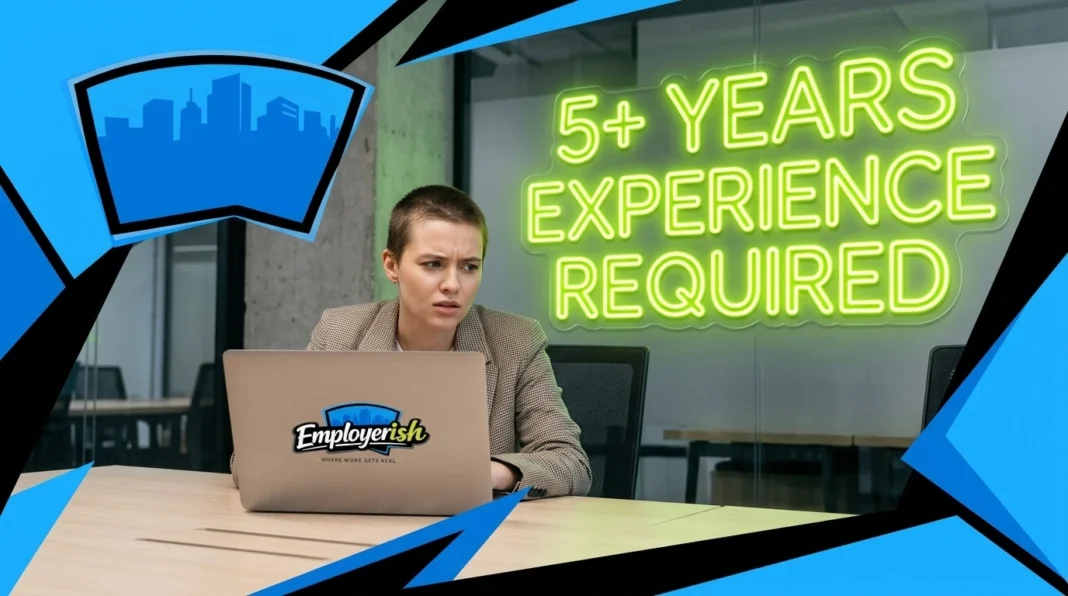
And then there’s the 3.7 years experience trap—one of the clearest signs that “entry-level” has become a corporate costume. Recent job posting data shows that roles labeled "entry-level" or "junior" now ask for an average of 3.7 years of experience. Not classroom projects. Not internships. Real experience. Proven results. Sometimes even leadership. For jobs that were supposedly built for people just getting started.
Check the latest career trends and you’ll see this isn’t some niche tech-sector mess. It’s showing up across industries, which is why this has become prime unfiltered workplace news material: the label says beginner, but the requirements scream “we want someone fully baked and weirdly underpaid.”

This isn’t a typo. It isn’t HR being “a little unrealistic.” And it definitely isn’t some innocent mix-up. It’s a strategy.
When a company posts a role that requires five years of experience, pays like it’s 2017, and still slaps “entry-level” on top like a discount sticker, they’re telling on themselves. They want experienced talent at entry-level prices. That’s the whole game. No mystery. No nuance. Just wage suppression with better branding.
A big piece of this is that companies don’t want to train anymore. They want workers who are “plug-and-play,” “day-one ready,” and somehow already fluent in every internal process they refuse to document. Ten years ago, entry-level usually meant someone would teach you the ropes. In 2026, too many employers want you to arrive with the ropes, the ladder, and a full presentation on how you’d optimize the ropes.
The rest of the trick is risk transfer. Hiring and developing new talent costs money, takes time, and requires patience—three things a lot of companies act allergic to. So instead of investing in beginners, they push the cost of learning onto workers. They want you to make your rookie mistakes somewhere else, on somebody else’s payroll, and then show up polished enough to be underpaid in theirs.
That’s why the old definition of entry-level doesn’t hold up anymore. In practice, “entry-level” now often means: we want you experienced, grateful, and cheap. The title says “starter job,” but the expectations say “mid-level contributor who won’t argue about compensation.”
Once you see that, the hiring process starts making a lot more sense. These job descriptions aren’t just filtering for skill. They’re filtering for compliance. They’re looking for the candidate willing to jump through six hoops, complete free work, smile through vague salary talk, and call it an opportunity. If you tolerate the nonsense before you’re hired, they’re betting you’ll tolerate even more once you’re on payroll.

If you’re still waiting for a company to “give you a chance,” that wait could get real long. The traditional ladder is busted, and the people in charge keep pretending it’s a motivation problem instead of a system problem.
That’s why the smarter move is to stop worshipping the label and start building leverage. If the market keeps lying about what entry-level means, create proof that doesn’t depend on their approval. Start the newsletter. Build the prototype. Take on freelance work. Help a local business. Launch the side project. In a market shaped by the entry-level experience paradox, proof of work beats résumé theater every time.
And yes, that also means treating a job like what it is: one income stream, not your whole identity. If a company is running the 3.7 years experience trap, dragging out interviews, and lowballing candidates while preaching culture, believe them the first time. That’s not an opportunity. That’s a warning label.
The bigger point is simple: if employers don’t respect the entry stage of a career, they probably won’t respect your growth once you’re inside either. So stop reading these listings like they’re rules handed down from a mountain. Read them like signals. Some are worth pursuing. Some are pure corporate gaslighting in a nice font.
That’s the real read on 2026 hiring trends. The lie is that entry-level jobs are built for beginners. The reality is that many are mid-level roles in cheaper packaging, designed to cut wages, kill training, and make workers absorb all the risk. The move is to stop asking for permission and start stacking visible, usable experience wherever you can.
If you want more unfiltered workplace news and real talk on job market nonsense, check out our Unfiltered takes and the rest of the Employerish Blog.
Have you seen a job labeled “entry-level” that clearly wasn’t? Drop the wildest requirement you’ve seen in the comments or tag us on socials. Let’s keep calling out the theater.